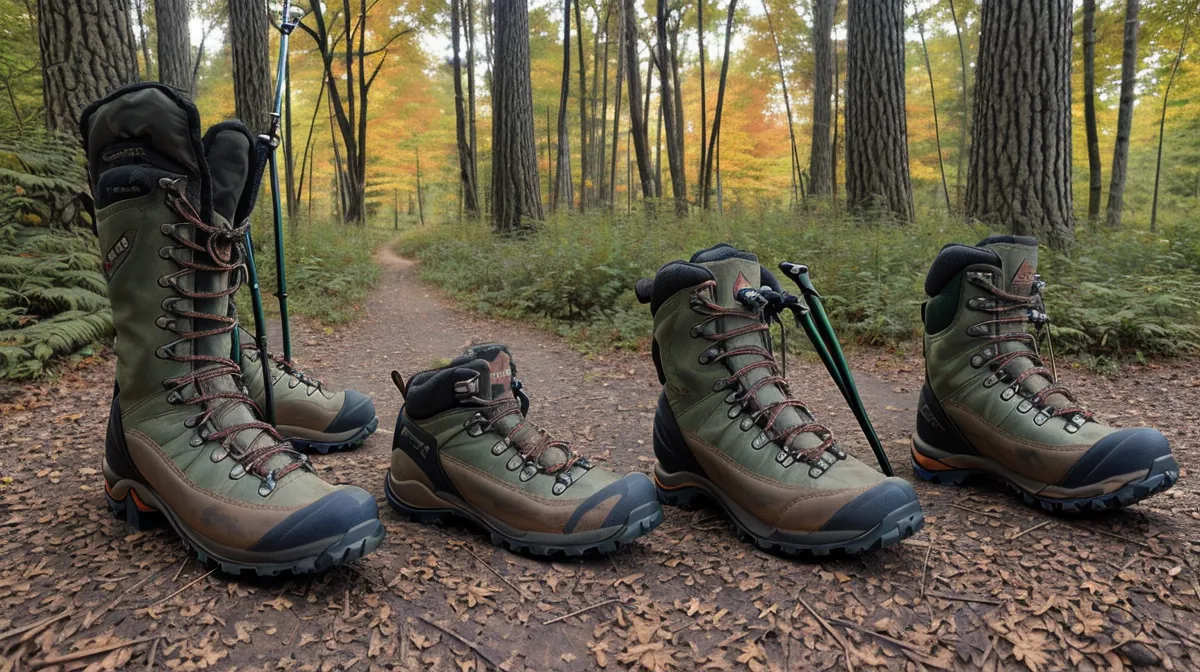
My left knee gives out first, and it always does, right where the loop past the old dam at Noanet Woodlands drops into loose rock and root. Three miles in, watching my feet instead of the tree line, and there it is: that hot little pinch behind the kneecap that only shows up once gravity starts doing more of the work than my legs want it to. Downhill knee pain has been finding new ways to humble me every season since I turned fifty, and stubbornness alone doesn't fix it. Knee pain prevention on the way down a trail, it turns out, is a completely different skill from just being fit enough to get up one.
Active aging, if that's even the right term for stubbornly refusing to quit a hobby that hurts, ended up meaning I had to renegotiate with my own joints instead of overpowering them. Twenty years of Saturday hikes built serious lungs. It did nothing to prepare me for what a rocky descent does to fifty-something joints — nobody warns you about that part at the trailhead register.
The Descent Is Where Hiking Longevity Actually Gets Tested
Here's the thing about hiking uphill versus downhill: going up is a lungs-and-legs problem, going down is a structural one. Your muscles lengthen under load instead of shortening, and that kind of strain is what leaves my quads sore for days after even a modest loop. The patellofemoral joint takes on a lot more than your bodyweight on a steep descent, though I won't pretend to know the exact multiple. The synovial fluid that cushions it needs regular movement to keep doing its job too, which is its own topic I won't fully get into here.
It's not just Noanet Woodlands, either. Friends who hike Blue Hills Reservation tell me the granite steps there do the exact same thing to their knees, and I believe them completely. Uneven rock is uneven rock no matter which reservation it happens to be in.
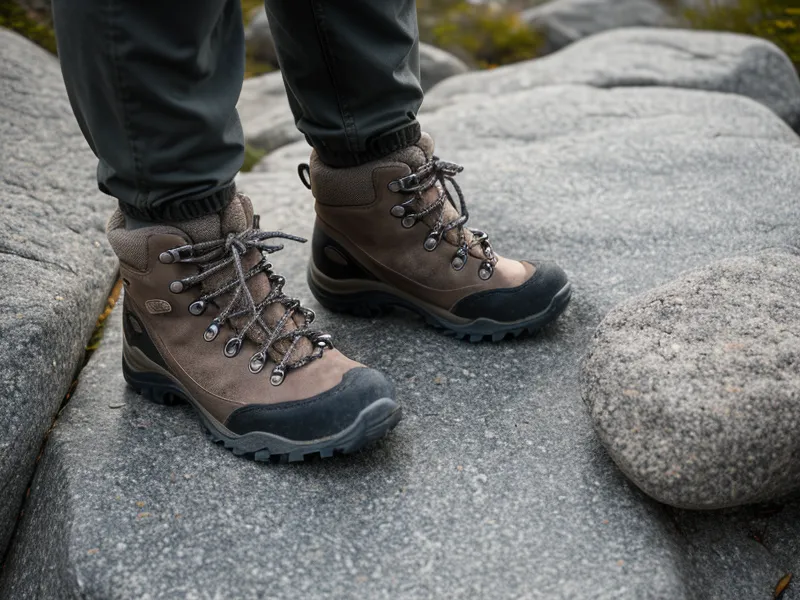
Does Strengthening Your Quads Actually Help?
Every trainer I've ever talked to says the same thing: strengthen your quads, protect your knees. I did months of leg extensions and squats, certain I was building a suit of armor. Instead my knees felt tighter than ever, especially on the way down.
Look — overly dominant quads pull the kneecap up tight against the femur, and on a downhill that just adds friction. Somewhere around six weeks into heavy leg days I switched strategy: less squat volume, more hip and calf work, because your hips are basically the steering wheel for your legs on a slope. Weak hips mean your knees cave inward on every step down, and that's where the sharp, shearing pain comes from.
Hip flexor stretches ended up doing more for unlocking my stride than any leg press ever managed, specifically best hip flexor stretches to relieve tightness, which I now do more evenings than not. Balance work and lateral movement train the outer hip in ways a squat rack never touches.
Trekking Poles, My Former Enemy
Trekking poles used to be, in my head, "cheater sticks" — something for hikers who couldn't handle a real trail. Then one miserable descent forced me to lean on a tree branch the entire way down, and I finally walked into a gear shop and bought a pair out of pure embarrassment. I felt about a hundred years old at the register.
Maureen, my Saturday hiking partner, still refuses to touch hers. Won't explain why, just shakes her head every time I offer to let her try mine on a steep section. I've stopped asking.
The mechanics took some practice — you want the poles planted slightly ahead of you on a downhill, like a second set of brakes, not just decorative sticks swinging at your sides. That single adjustment took real weight off my knees, though I won't put an exact number on how much. I wrote more about the specifics, including how differently I plant them now, in why trekking poles for bad knees changed my routine.
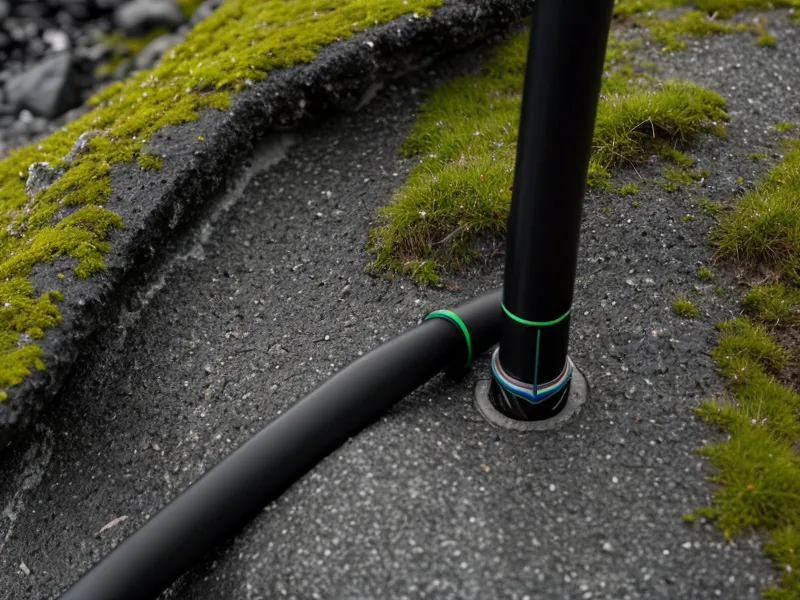
Learning to Land Like a Fox, Not a Brick
Foot strike mattered more than any piece of gear I bought. Watching a much younger hiker practically dance down a rock face at Noanet Woodlands — landing soft on the midfoot instead of slamming his heels down, knee slightly bent the whole way — taught me more in five minutes than any article had.
Heel-striking with a straight leg sends the shock straight up your shin and into your knee, no suspension at all. Landing mid-foot with a soft knee lets your calf and ankle absorb some of that instead — quieter, steadier, and a lot easier on the cartilage over a long descent.
On the loose, steep stretches I've started using a sideways shuffle instead, turning my body and stepping down at an angle. It looks ridiculous, honestly. I'm aware I resemble a confused mountain goat. But it shifts the load onto the outer hip muscles instead of dumping everything on the kneecap, and that trade is worth looking a little silly for.
Recovery Starts Before You Reach the Car
Even with better technique, a long hike is still a lot to ask of a fifty-something body. Recovery, I've decided, actually starts hours before the hike does, back at a desk of all places. There's a whole desk-to-trail problem that has nothing to do with hiking form and everything to do with how the rest of the week gets spent.
A standing desk was my first attempt at fixing that, installed at work with real hope attached to it. It barely moved the needle. Turns out standing still in one spot for hours isn't meaningfully different from sitting still for hours, not for hip flexors that need actual movement instead of a change in furniture.
Sitting, or standing still, keeps the hip flexors and hamstrings short and tight, and that tightness pulls straight through to the knee the moment real movement starts again. What actually helped was working exercises for stiff knees after sitting at a desk into the middle of the workday instead of saving everything for the weekend.
One move in that routine is aimed specifically at activating the femoral nerve running down the front of the thigh. It sounds dramatic, but it means about five quiet minutes before lunch instead of zero.
Kathleen, from my Wednesday-night walking group, shows up with homemade granola bars every single week without anyone asking her to, and it's become the small thing I look forward to almost as much as the walk itself.
Ibuprofen stopped being the first response somewhere along the way. My stomach doesn't tolerate it like it used to, and masking pain while the inflammation keeps doing its own thing never sat right with me either. Looking into natural alternatives to ibuprofen started as necessity and turned into genuine curiosity.
Somewhere in that same stretch of research, JointVive vs Standard Glucosamine came up, mostly because I wanted to know what actually supports joint lubrication versus what's just clever marketing. No medical training here, none at all, so treat anything in this piece as one woman's trial and error, not a recommendation.
A Different Kind of Mobility After 50
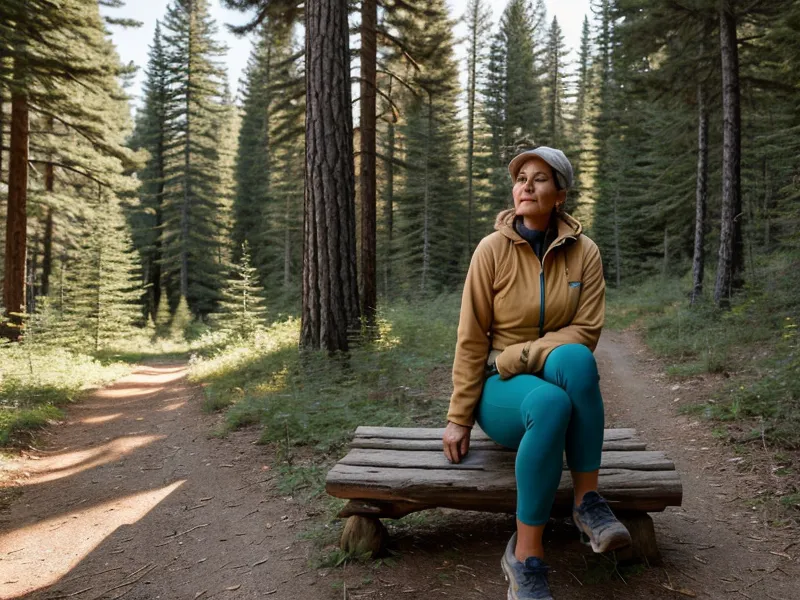
Around week eight of doing the hip work consistently, not sporadically, I bent down to tie my boot laces before a hike and stood back up in one smooth motion — no bracing on the doorframe, no two-step wobble to get upright. The boots themselves were relatively new by then too, and the cushioning underfoot doesn't last forever; the foam in a midsole quietly stops doing its job long before the tread looks worn. I didn't clock the lace moment until I was already standing in the driveway, boots on, keys in hand, wondering why it felt so unremarkable.
That's the lesson worth carrying past this one hike: none of it works as a single fix. It works as a stack of small, unglamorous habits — poles, foot strike, hip work, fewer excuses about the desk chair — that add up to knees that don't get the final say over the whole outing. Noanet Woodlands is still on my Saturday rotation, and Maureen still refuses to touch a trekking pole, and I still miss the version of downhill that didn't require any of this thinking at all. But most days, that's a trade I'll keep making.