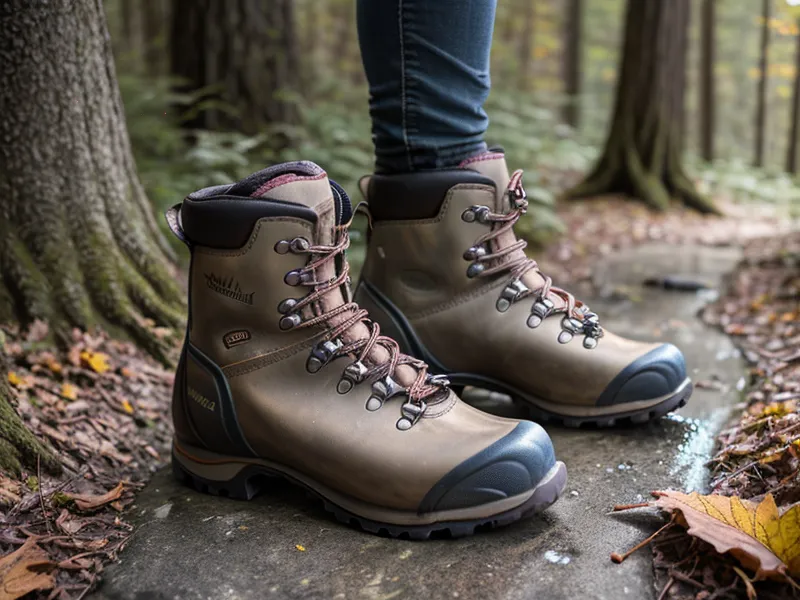
Can the cheapest mobility aid on the rack — a pair of trekking poles — really change whether you finish a hike or turn back at the first descent? That is the question I get more often than any other, usually from a hiking friend my age who has just admitted, half-embarrassed, that their knees are starting to win the argument. Before I answer it: heads-up that this post has affiliate links, and if you buy through one I earn a small commission at no extra cost to you. I only point to gear and joint-health supplements I have hauled through the mud myself. Not a doctor, not a physical therapist, just a fifty-four-year-old who treats active aging as a string of small, stubborn negotiations.
Do Trekking Poles Actually Take Pressure Off Bad Knees?
Short answer: yes, and it is not a small effect. Walk downhill and the force going through your knee can hit three to four times your body weight — every step, every descent. Plant a pole and you hand part of that force up to your arms and shoulders instead of letting your cartilage eat all of it. On downhill terrain, the drop in knee loading lands somewhere around twelve to twenty-five percent. That is the whole reason poles rebuilt my weekends — the downhills are exactly where my joints used to scream the loudest.
Here is the thing about that twenty-five percent: you feel it most the morning after. The honest proof for me isn't out on the trail — it shows up the next day, when I swing my legs out of bed and my hip just lets me stand. No protest. No bargaining for the first ten steps.
Poles were also the first adjustment that actually did something. The compression sleeve I tried before them did not — it squeezed my knee like a sausage casing, warm and snug and useless on a real downhill, because a sleeve does nothing about the load. The big reservation a few towns over has about 125 miles of trail, and I used to roam all of it. These days my whole world is the loop at Borderland State Park — and the poles are the reason I still have even that.
Old Lady Sticks, and Other Lies I Told Myself
For a long stretch I wouldn't touch them. Fifty-four years old, and I'd decided poles were for the Everest crowd or for people who had already quit. So I practiced in the backyard after dark, where the neighbors couldn't watch me look ridiculous. And yes, I miss the version of me who could lace up and just go, no elevation math first. That ache is real. But missing it from the trail beats missing it from the parking lot.
Look, nobody hands you a manual for this part. The body starts filing grievances, and you either adapt or you slowly shrink your life down to the distance between the car and the couch. Poles felt like a surrender the first time I held them. They are the opposite. They are the thing that keeps the trail on the table.
Which Grip Works When Your Hands Hurt Too?
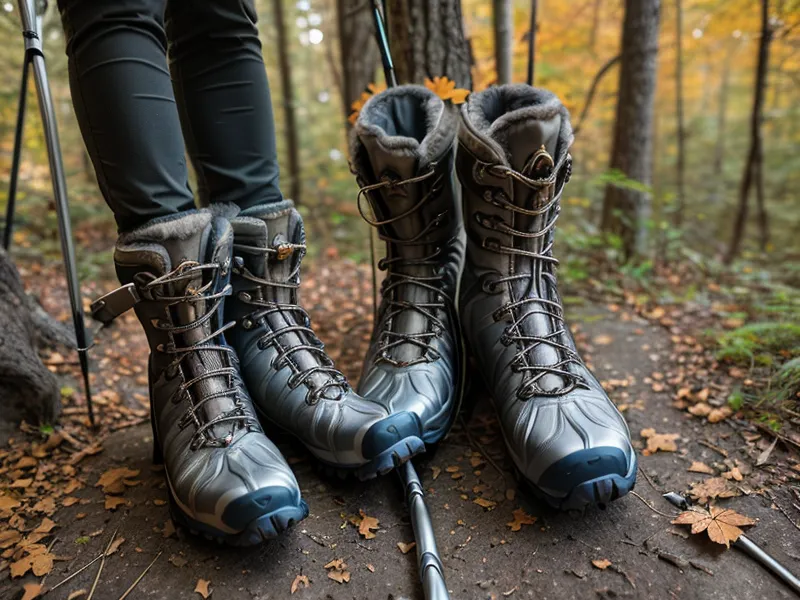
This is the question most pole advice skips. The usual line is "grab a pair and go," which is terrible counsel if your hands stiffen up the way mine do. A standard grip makes you squeeze to stay stable, and after an hour my fingers would lock into claws. What to look for instead: a wider ergonomic palm-rest top, where your hand sits on a platform rather than clutching a handle. That one feature is the whole difference between gliding and white-knuckling your way through the woods.
Most of us sit at a desk all day and then ask our hands and knees to climb on Saturday — that desk-to-trail jump is half the trouble. If your hands give you grief between hikes, keeping the surrounding muscles moving beats babying them, so I work through the Best Exercises for Stiff Knees After Sitting at a Desk All Day on my off days. One quiet truth, too: poles share the work with your boots, so a midsole that's gone flat underneath you undoes a chunk of the benefit — but that's a whole separate conversation.
Poles Cannot Reach the Grinding Inside
Here is the part where the poles stop being the answer. They take the load off the outside of the joint. They do nothing for the grinding inside — that dry, sandpaper feeling deep in the knee, the part tied to your synovial fluid. Poles fixed my outside problem. The inside one needed something else.
For that, I keep a daily capsule going — Joint Genesis [My Daily Pick] — mostly because one a day slides into a morning routine without any thinking. No miracle expected. About twenty minutes into a climb, a deep warmth tends to settle into my knees, like the stiffness is finally loosening its grip. It comes with a long guarantee window, which matters, because this stuff builds slowly — a couple of months, not a couple of days. I wrote up the unglamorous version of that in My Honest Review of Joint Genesis After Three Months.
On the harder weekends — the ones where the elevation gain is going to be aggressive — I keep JointVive [Classic Approach] in the cabinet. It's the classic glucosamine-and-chondroitin route with turmeric folded in, which seems to help with the day-after swelling. And if pills aren't your thing at all, Ageless Knees [No-Pill Option] is an exercise-based program built around home knee-mobility work — a way to build the supporting muscle without adding one more capsule to the pile.
Planning a Hiking Day Around Your Joints, Not Your Ego
The real skill nobody warns you about is route planning. I test gear on a folding card table in the back bedroom of our raised ranch in Natick — trail shoes lined up across it, the north-facing window looking onto the stockade fence — and half of what I'm really doing at that table is deciding what my joints can take that week. The fifteen-mile loops are gone. A focused three-miler at Borderland State Park leaves me just as filled up, and far likelier to come back the next weekend.
My neighbor Jim Pollard checks trail conditions on some website that looks like it was built in 2009, then reads me the report like scripture before we set out. He's a reluctant walker — I coaxed him onto the easy trails and he grumbles the whole way — but he shows up. A reader named Elaine Brosnan writes in from western Massachusetts, too; her off-trail cross-training is water aerobics, and she's refreshingly blunt that it does more for her knees than she ever expected it would.
On a humid week my trail shoes never quite dry, and they sit by the back door carrying the woods inside — that damp, resiny pine smell that tells me I actually went somewhere this weekend. That smell is the whole point of the exercise. When I'm sore the day after, I reach for the Best Natural Alternatives to Ibuprofen for Chronic Joint Pain Over 50 instead of my old habits.
So — back to the question I opened with. Can a pair of poles change your whole hiking routine? For me, yes, but only as one piece of it. The poles took the load off the descent; a daily routine like Joint Genesis went after the grinding the poles could never touch. Two years of adapting instead of quitting taught me to stop hunting for the single fix and start stacking the small ones.
If your knees are making you second-guess your weekend, don't wait as long as I did to try a different approach. Borrow a friend's poles for one downhill and feel the difference for yourself — and if the grinding is the part that keeps stopping you, you can check out Joint Genesis here and see whether it gives your joints back a little rhythm. The trails aren't going anywhere. Neither are we.