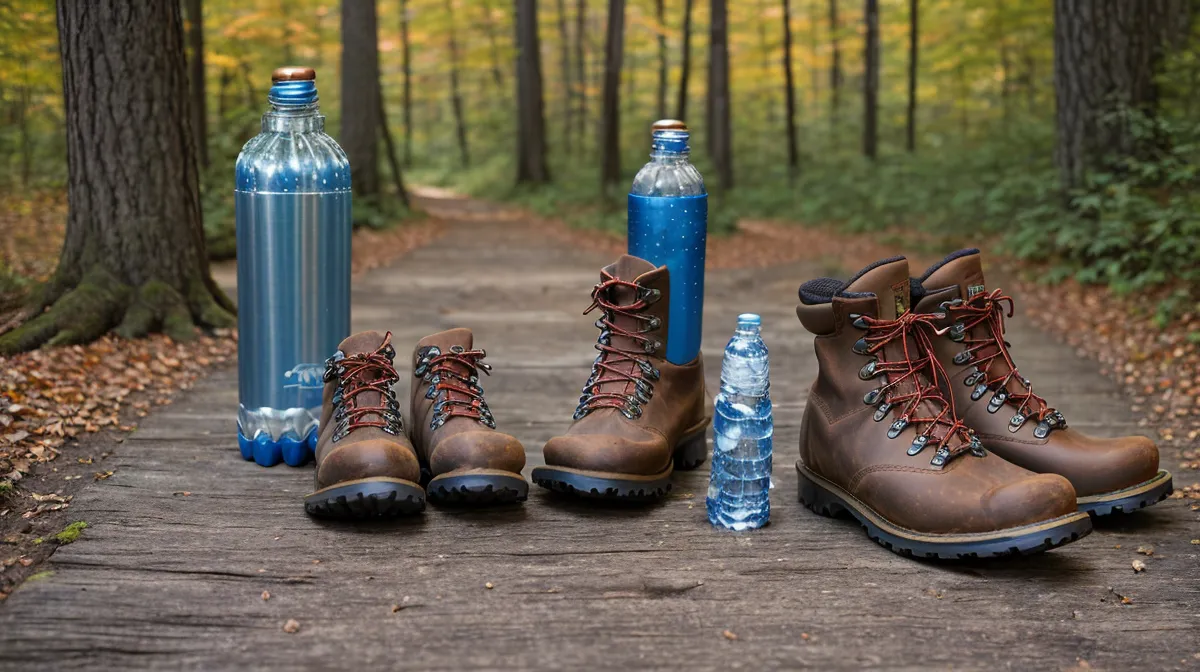
Do you fix creaky joint mobility with a bottle of capsules, or by changing how you move on the trail altogether? That question followed me around for most of last year, back when hiking after 50 started meaning something different than it used to. I never landed on one tidy answer; just two approaches that pulled in opposite directions, and a stubborn refusal to give up either one.
Quick disclosure before we get into it: this post has a couple of affiliate links in it, and if you buy something through one I get a small commission at no extra cost to you. I only ever mention products that are actually sitting in my own cabinet at home. I'm not a doctor, not a physical therapist, and definitely not qualified to tell you what to take. Check with your own doctor before changing up any routine of your own.
Joint Mobility After 50: Two Different Bets
Two years of adapting how I hike have taught me to treat supplements and gear as separate bets, not one fix for everything. Neither one is a cure. I tried a cortisone shot in one hip early on, and it eased things for a little while before the ache found its way back, so I never repeated it. Somewhere between that shot wearing off and giving up entirely, I found the actual proof I needed sitting in my own glovebox: a travel bottle of ibuprofen, buried under a stack of old trail maps, completely untouched. I hadn't reached for it in longer than I could remember, and that told me more than any bottle label ever could.
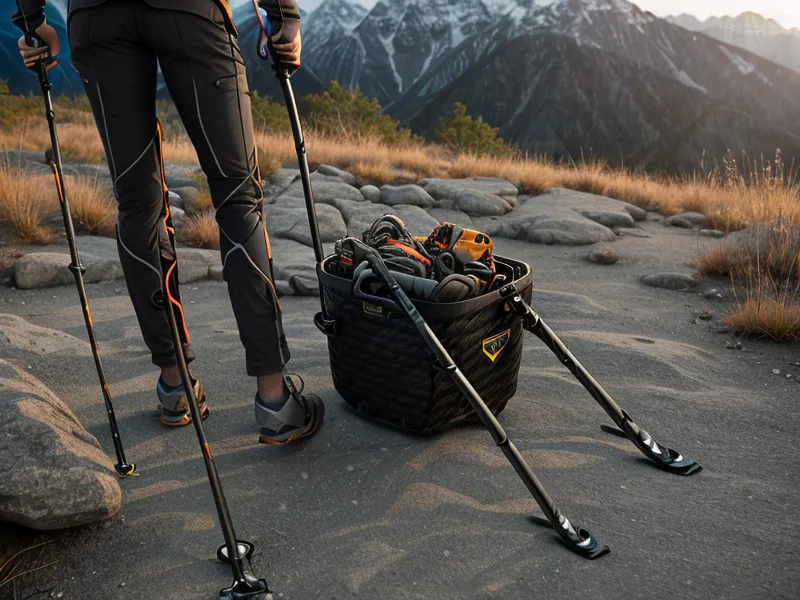
Poles were the other bet, and I resisted them at first, sure that carrying them on a gentle incline would make me look like I was summiting something dramatic. What actually changed my mind was realizing poles shift real weight off your knees and into your arms and shoulders. That's the redistribution trick behind why trekking poles for bad knees changed my weekend hiking routine. Tom Maguire, a neighbor from down the street, only picked up his own pair after I talked him into borrowing mine for one descent on Skyline Trail. He bought a set of his own within the week, and now he shows up on my porch some mornings, unannounced, with a full trail report.
The Two Camps Split on What Joints Actually Need
Supplements split into two camps, and I didn't understand that until I'd wasted months assuming they were interchangeable. I went down a hyaluronan rabbit hole early on trying to figure out which camp actually mattered for me, though the full mechanism is a deeper topic than I want to get into here. One camp is the building-block approach; JointVive vs standard glucosamine is the comparison I get asked about constantly, and the honest answer is that glucosamine and chondroitin still matter if they've worked for you before, since they're the most studied combination in the category even if the research is mixed depending on who you ask. JointVive folds turmeric into that mix too, and I notice it more on the mornings after a longer hike than on the flat, easy ones, though it does mean more capsules to keep track of, and it's a hard pass if shellfish is a problem for you.
The other camp is about keeping the joint's own fluid moving rather than rebuilding anything, which is where synovial fluid health comes into it. I'll leave the deeper breakdown of that to someone else's post, but mine clearly needed the help. What I landed on is Joint Genesis [My Daily Pick], built around that lubrication idea instead of the building-block one. One capsule with my coffee, nothing complicated to remember by mid-afternoon. The difference showed up less like a dramatic before-and-after and more like background noise fading out. Fewer moments catching my breath at the top of a rise, less bracing before standing up from my desk chair.
Does a Desk Job Cancel Out Either One?
Forty hours a week behind a desk complicates both bets more than either supplement admits. Sitting that long creates its own desk-to-trail problem no capsule fully solves on its own; joints stiffen up regardless of what's in your system, and I still catch myself doing an awkward shuffle for the first few steps after a long meeting. Stretching in the evening helps more than either bottle does, and there's a whole nerve-activation angle to that stretching I won't get into here, though it's part of why I don't skip it most nights. If you're stuck in a chair like I am, the best exercises for stiff knees after sitting at a desk all day are worth bookmarking regardless of which supplement camp you land in.

Testing It on Skyline Trail
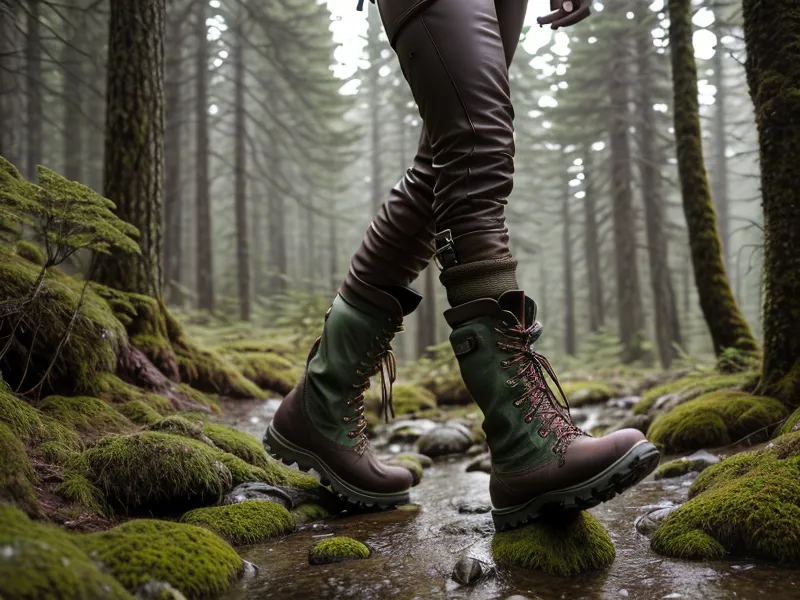
Gear matters just as much as what's in the capsule, and I'm slower to admit that than I should be. Beverly Strout, who works the shoe wall at REI part-time, still texts me out of nowhere whenever a boot she knows I've been eyeing goes on clearance. She's the reason I stopped buying trail shoes on looks alone. The cushioning under your foot has its own lifespan too, wearing out long before the tread does, which is a tangent for another time.
On a recent morning back on Skyline Trail, the incline that used to make me brace for impact just felt like an incline. Boots doing their job. Hips doing theirs. The geology behind why these old ridgelines feel steeper than they look is its own interesting detour if you want to go down it. The only sign I'd dressed for a colder morning than it turned out to be was how stiff my pack's hip belt felt against my fleece layer until an hour of walking finally warmed it soft.
So Which One Should You Try First?
So which bet should you make first? If you've used glucosamine before and it actually helped, or your joints swell more than they creak after a long day, JointVive [Classic Approach] still earns its spot in the cabinet; just skip it if shellfish is a dealbreaker. If your joints feel more dry and stiff than swollen, creaky rather than achy, the lubrication-first approach makes more sense, and patience is the price of admission, since Joint Genesis builds slowly over a couple of months rather than overnight. Active aging was never going to mean picking one permanent fix and calling it done. It means running two experiments at once, keeping what earns its place, and dropping what doesn't, which most days is the closest thing to an answer I've got.