Out of the car after my last hike, no slow-motion shuffle to the front door, just walking like a regular person. That used to be the moment my knees reminded me how old they felt. Active aging is mostly small wins like that one. So here is my honest update on hiking over 50 with cranky joints: you do not have to quit. You adapt, with shorter trails, lighter shoes, and a little daily care for your joint health.
Quick heads-up before we get into it — a few of the links here are affiliate links, which means if you buy something through one, I earn a small commission at no extra cost to you. I only point at things that survived my own trial-and-error, and there were plenty that didn't. The full disclosure lives on the site.
Can you really keep hiking over 50 once your knees start complaining?
Yes, with a caveat. The trail does not care that you used to crush long loops every weekend; it only responds to what you bring to it that day. Most of my old problem was treating my body like it was still twenty-five. Sit at a desk all week and then hit a rocky trail cold, and the trail wins every time; that desk-to-trail jump is its own kind of trap for anyone with an office job. So the honest answer is keep hiking, but change the game: shorter routes, a real warm-up, and gear that works with your knees instead of against them.
Pushing through the pain was the most expensive mistake I made
For a long stretch I just tried to power through the stiffness, figuring my knees would get the message and quit whining. They did not. Joints do not have an ego; they do not care about grit. One morning I skipped my few minutes of mobility moves to get on the trail before the heat, and my right knee locked up halfway around the loop. Limping back to the car taught me more than any pep talk: the warm-up is not optional, ever.
Then there was the first really good knee day. Felt great, so naturally I added miles and chased the long loop like nothing was wrong. Paid for it for two days straight. A good day is not a green light to spend everything; bank it, do not blow it. The foam roller got the same hard no from me; everyone swore it would loosen my legs up, and for my knees it did about as much as rolling a pin over bread dough. That whole season was a Hard Lesson of Trading Miles for Mobility, but I needed it.
Synovial fluid and joint health, in plain English
Here is the thing nobody explained to me until I went looking. That synovial fluid inside your joints is basically the body's own lubricant, the slippery stuff that lets bone glide past bone instead of grinding. Picture the oil in a door hinge, or a bike chain that runs whisper-quiet when it is freshly oiled and screeches when it is bone-dry. As the years add up, that lubrication just does not flow as freely. The part that surprised me most: movement is part of what keeps it working; sitting still does the opposite. Which is exactly why the fix turned out to be two-sided: support the joint a little, and keep the thing moving.
Do joint supplements actually do anything?
Honestly? Nobody can promise you a miracle in a bottle, and anyone who does is selling harder than I ever will. What I settled on for the internal side is Joint Genesis, partly because it is one capsule a day, which fits a busy-and-forgetful brain like mine, and partly because it is built around that same joint lubrication I just walked through. It is shellfish-free, gluten-free, and dairy-free too, which matters when your stomach is as touchy as your knees. Not a cure, but the morning crunch feels less sharp when I swing my legs out of bed. You can check out Joint Genesis here if the internal-support angle is what you are after.
Some folks do better with the classic route. A neighbor of mine, out on the tennis court three mornings a week (the show-off), swears by JointVive, which leans on glucosamine and chondroitin plus some turmeric, the stuff people have leaned on for decades. It did not fit me because of the multiple capsules, but if those ingredients have worked for you before, you can find JointVive here; just skip it if you have a shellfish allergy, because that one is not for you. Talk to your own doctor before you start anything new; I am a woman with a spreadsheet and a hiking habit, not a medical anything.
Strengthening the muscles around the knee
Pills were only ever half of it. The bigger shift was admitting I could not sit my way to better joints; I had to move, and move right. The program I keep coming back to is Ageless Knees, an exercise-based one I can do in the living room while the coffee brews. It is affordable enough that it did not make me wince, and it works the muscles around the knee so the joint is not carrying the whole load by itself. That is the same logic behind How I Strengthened My Knees Without Using Heavy Weights: small movements, big payoff. If movement is more your lane than supplements, check out Ageless Knees here.
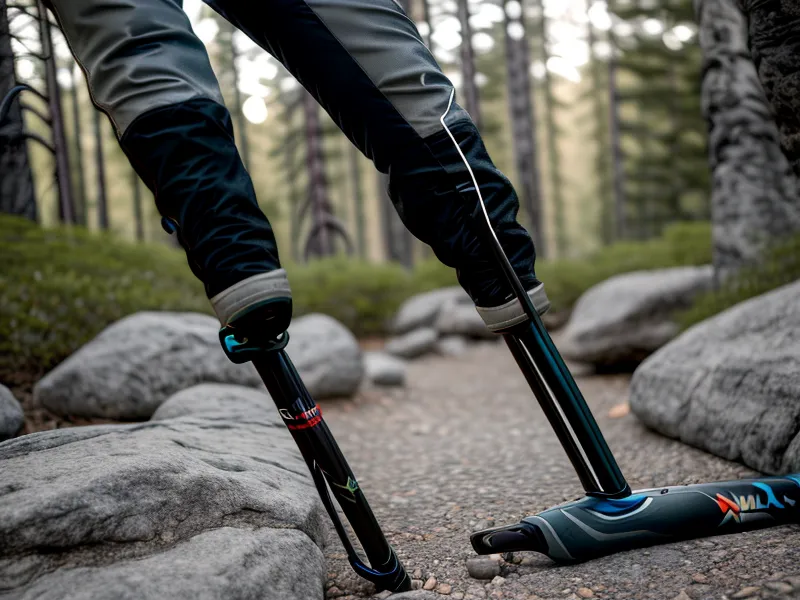
Two small add-ons earn their place in my week. An evening stretch with one simple tool, one that wakes up the muscles along the front of the thigh, does more for my downhill steps than any amount of willpower. And trekking poles are not a vanity prop; they quietly shift a chunk of the load off your knees on the descents, which is exactly where my knees used to scream loudest.
Which shoes finally stopped fighting my knees?
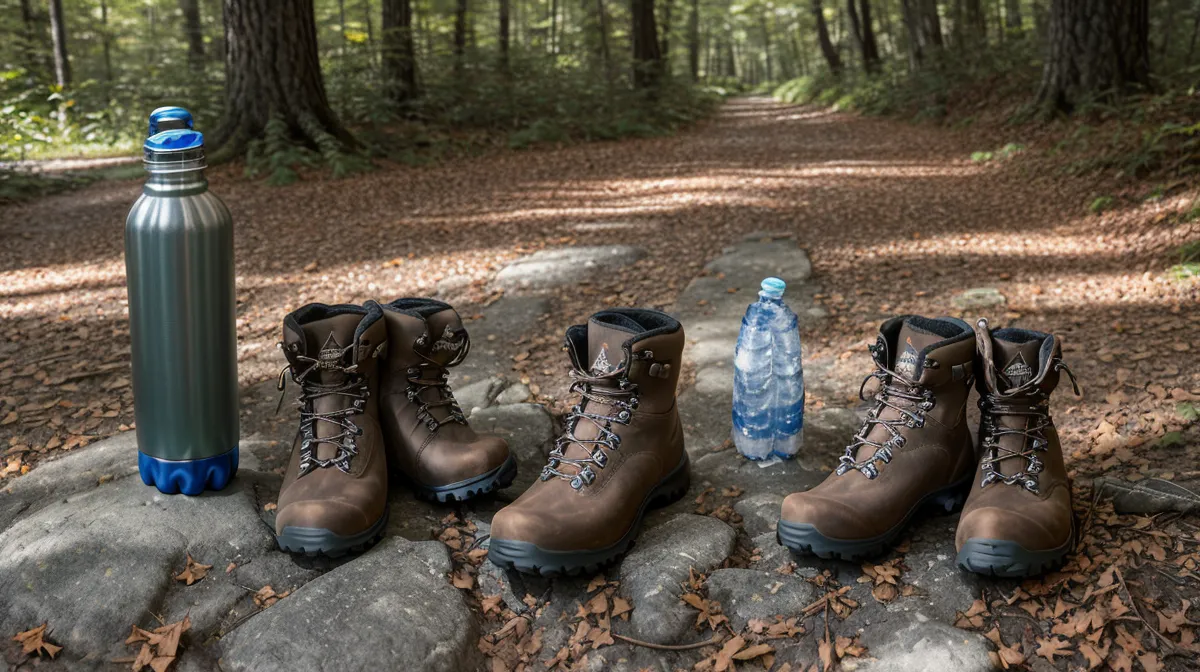
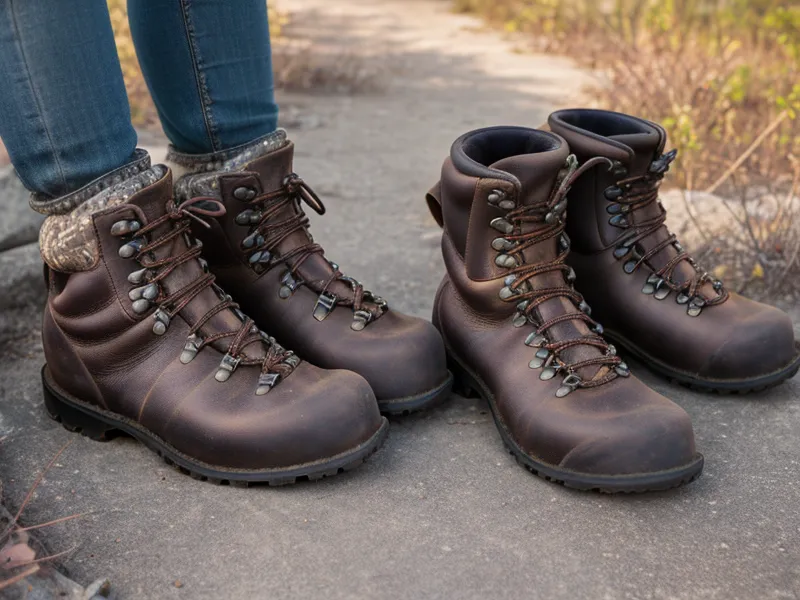
Bigger boots were my logic for a while. More boot, more support? Wrong, at least for me. The heavy, stiff pair I bought just put more weight on my feet and fought my stride, and my knees took the bill. Switching to lighter, wide-toe-box trail runners changed everything; less weight down low, more room for my toes to actually do their job. The other thing nobody warns you about is that the cushioning wears out long before the shoe looks dead; that midsole foam quietly flattens and stops absorbing the shock. I dug into all of it in How to Pick Hiking Boots That Save Your Knees, and it changed how I read a gear wall.
These days the Middlesex Fells is my regular, close to home and forgiving when I pick the right loop. It has its share of rocky granite ridgeline, the same scrambly terrain our state reservations are famous for, and on a bad-knee morning I just route around it. Cinching the pack's hip belt snug over my fleece, feeling that cool strip of webbing settle against me before I start, that is my signal that the planning is done and the walking begins.
Food, water, and the part I keep getting wrong
Eating got a quiet overhaul too; nothing dramatic, because life is too short to give up the good sourdough from the bakery down the road. More salmon, more walnuts, a lot more water. The part I keep getting wrong is consistency. During one busy patch I let all of it slide, too much grab-and-go food and never enough water, and my hips stiffened up like rusted hinges on a garden gate. For me, hydration turned out to be the cheapest knee insurance I own; when I am even a little dried out, my joints are the first to file a complaint. Not medical advice, just a pattern I have watched in my own body enough times to trust it.
Look, I miss the old me sometimes, deciding on a whim to climb something big and simply doing it with no elevation chart, no warm-up, and no negotiation with my own knees. That version is gone, and pretending otherwise just made me miserable. Taking care of the person I actually am now is what got me back onto the trails. If you want the daily support I lean on to keep my joints moving, you can find Joint Genesis right here; whatever you try, please talk to your own doctor first. The woods are too good to skip over a little crunch in the knees. I will be the one out there with the poles and the stubborn grin.